 |
 |
Your Excellency, Ladies and Gentlemen,
I am most honoured to have this opportunity of meeting you at the UIA Congress and speaking to you as the new Chairman of the Royal Institute of Dutch Architects, or 'BNA'.
We have just listened to Luut Rienks, our longstanding vice-chairman, who also holds the Foreign Relations portfolio on the BNA council. He and Rob Budding are our candidates for the UIA Council, Region one. Since Luut Rienks is himself the very model of modesty, I would like to highlight a few aspects of his professional background myself. His experience is very extensive, and in previous jobs he has carried out projects on practically every continent. He has worked in Latin America, in East Asia, in Africa and, of course, in Europe. He has also been a member of the UIA Working Group on Educational and Cultural Spaces for over fifteen years, and has been taking part in the UIA Region One president's meetings since 1999. To sum up, he is an expert administrator and an internationally experienced architect, whose candidature for the council I support unreservedly.
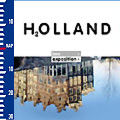
Coming though it does from one of the smaller member countries, the BNA has undertaken to make a substantive contribution to the theme of the 21st UIA Congress, 'Resource Architecture'. We started by preparing a small, physical exhibition of Dutch architecture projects. But the reach of a conventional exhibition would have been restricted to the visitors here in Berlin, so earlier this year, we decided to transform it into an English-language website; a virtual exhibition, in other words. The subject is: Dutch architecture projects which enjoy a close relationship with water, the element that is so copiously available in our country. On behalf of the Ambassador of the Netherlands, Mr. Lawson will soon have a few words to say about the special bond that the Netherlands has with the water.
There are three things, ladies and gentlemen, that a competent architect can do very well. He is capable of distilling a need of society into one or more concepts for a built solution. Then he is capable of transforming the chosen solution into a set of spaces and images; not just images we already know, but ones that are new to us. Finally, the competent architect is well grounded in matters of building and engineering, so that the new spaces and images turn into real buildings as intended, and do so efficiently. It is that combination of concept, image and technology, which makes an architectural project so perfectly suited to presentation on the Internet. Understandably, it's a medium that is being used more and more widely among our professional group.
A well thought out web presentation addresses itself to you personally; to you, as the unique user, at your own computer screen and keyboard. The web enables you to enter into a one-to-one relationship with information you have yourself selected, at your chosen time and place.
So it allows you to set the terms of your encounter with architecture. Another advantage of the Internet is that it is a powerful medium of contact with people of similar interests. In my own case, I have had over six years of experience in publishing architecture on the Internet, for the greatest part professionally. With an evergrowing number of Internet users, my Web presence has resulted in many new acquaintances. I am currently part of an international network of over thirty architecture domains. Many of those first, virtual meetings have developed into longlasting contacts and into a real, more profound meeting of minds.
And that is the kind of encounter that matters - at a congress like this, as well. We are together with an impressive number of architects from all over the world, from east, west, north and south, from every continent; exchanging ideas, networking, conferring, making appointments and listening to one another. Admittedly, that last is not always the best-developed aptitude among architects. We all know, don't we, that an architect considers a dialogue successful only if he spends at least 65% of the time doing the talking...
I am sure you will all find a suitable moment - either here, or at home, on your own computer - to make acquaintance with our web exhibition of Dutch architecture up to its knees in the water. We have compiled some ninety projects for you to see, and classified them along eight themes, each of which is amplified by a short introduction: Remaking Landscape; Urban Planning; Water Dwellings; Working on Water; Engineering Works; Crossing Water; Leisure and Culture. This set of themes should give you a clear overview of the state of architectural invention, and of the new images that are emerging, in the Netherlands. Shortly, there will be an opportunity for you to join me on a surf through some of the possibilities.
|
|

